
Alarm Systems for Ottawa Businesses: What to Know
Cameras record. Alarms interrupt. That is the simplest way to understand why a business needs both: the camera system shows you what happened after the fact, while the alarm tells you — and whoever is monitoring — that something is happening right now, while there is still time to respond. This guide covers how commercial alarm systems work, what the parts are, and how to fit one into a complete security setup for an Ottawa business.
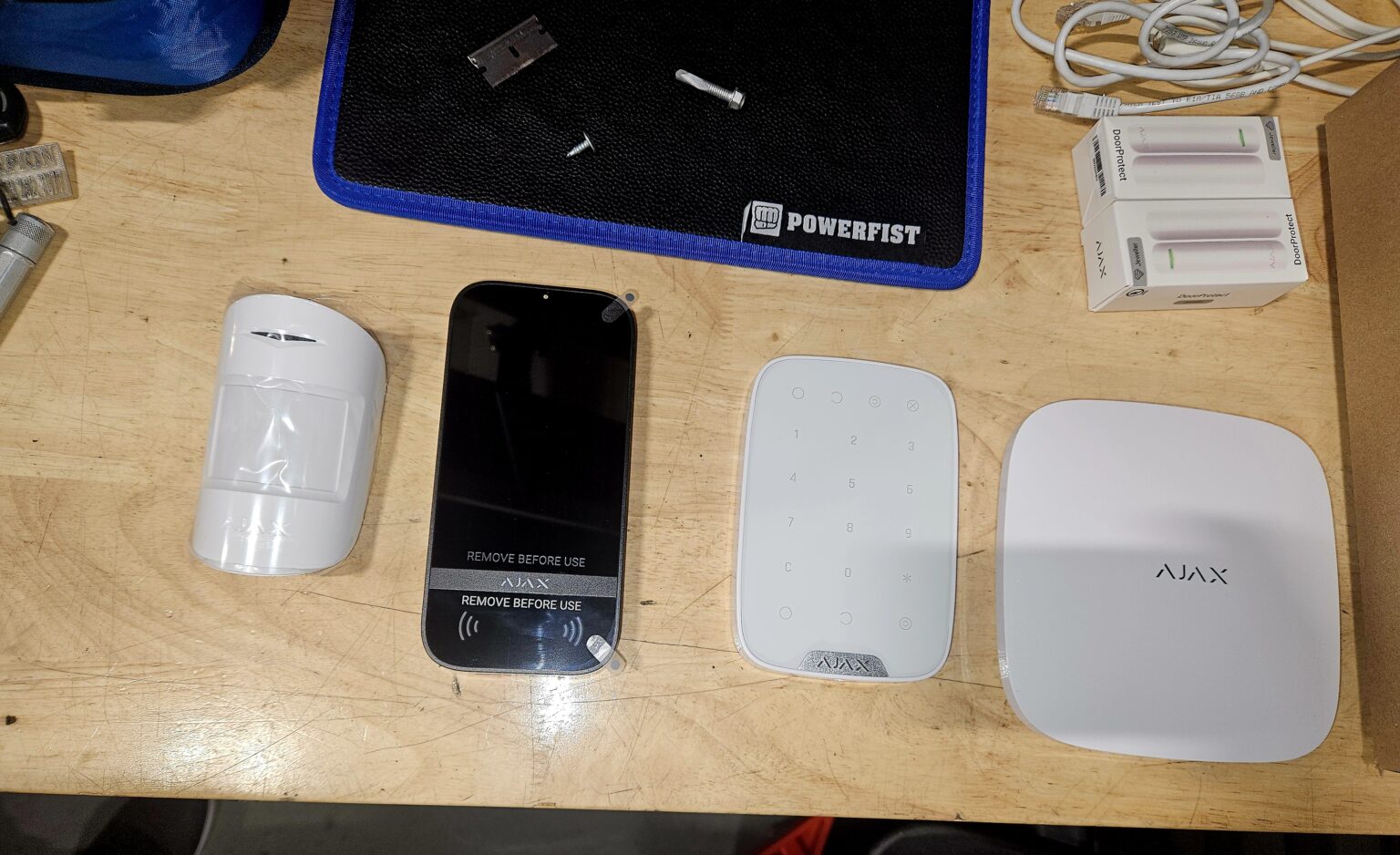
Sensor types and where they go
Door and window contacts. A magnet and a switch: open the door while armed and the zone trips. Every exterior door gets one, and so do overhead doors at loading docks and any interior door protecting a stock room or server room.
Motion detectors. Passive infrared sensors that see body heat moving through a space. Placed to cover the routes an intruder would take once inside — main floor, corridors, the back office. Commercial-grade units are pet- and pest-immune and can be masked from HVAC vents, which are the usual sources of false trips.
Glass-break sensors. Acoustic sensors tuned to the frequency of breaking glass, covering storefront windows so the alarm trips at the break, not after someone has climbed through and walked past a motion detector.
Panic and duress. A button under the counter, or a duress code on the keypad, for retail and hospitality environments where staff may need to call for help silently.
Monitoring options
Every system we install can be self-monitored: the panel pushes an alert to your phone, with live video from the matching camera if the two are integrated. That works well for owner-operated businesses that can act on an alert.
Professional monitoring adds a central station that receives the signal, verifies it (by video, by call, or both) and dispatches police or a guard service. For premises with high-value stock, or where the owner is not always reachable, this is the right choice. Either way, you own the equipment; monitoring is a service you can add or change, not a contract that locks the hardware to one company.
Integration with cameras and access control
A stand-alone alarm is a blunt tool: it tells you a zone tripped and nothing else. When the alarm is part of one system with your cameras and access control, a tripped zone pulls up the camera covering it, a door forced open during business hours flags on the access controller, and you can arm or disarm from the same app you use to look at the cameras. Verifying an alarm by video before dispatch also matters in Ottawa, where repeated false alarms carry a fee.
Avoiding false alarms through design
Most false alarms are design problems, not equipment failures: a motion detector aimed at a heater, a door contact on a door that rattles in the wind, staff who were never properly trained on the arming routine. Good design fixes this up front — sensor placement checked at the site visit, entry and exit delays set for how people actually leave the building, schedules that match your hours, and a walkthrough with staff at hand-over. A system that cries wolf gets switched off; a well-designed one runs for years without a thought.
Putting it together
An alarm is one layer. Cameras, access control and monitoring are the others, and they are far more effective installed together than bolted on one at a time. See our commercial security systems in Ottawa page for how the full system fits, or call 613-627-0660 and we will come out, walk your premises and give you a written scope.